
Nguyen Roche
  • Home
  • Lawyers
    • Jason Nguyen
    • Erin Roche
    • Aaron Goodwin
    • Matthew Thumser
    • Mark Sobel
    • Gary Damico
  • Practices
    • Business and Corporate Law
      • Commercial Litigation
    • Real Estate Law
      • Real Estate Litigation
    • Family Law
      • Divorce
        • High-Asset Divorce
      • Child Custody
      • Child Support
      • Alimony/Spousal Support
      • Adoption
      • Domestic Violence
      • Marital Agreements
        • Prenuptial Agreements
        • Postnuptial Agreements
      • Mediation
      • Paternity
      • Property Division
      • Visitation
    • Estate Planning Lawyers in Maryland
    • Criminal Defense Lawyer
      • Domestic Violence
        • Child Abuse
      • Drugs
      • DUI
        • Second-Offense DUI
      • Guns
      • Homicide
      • Theft
      • Sex Crimes
      • Child Pornography
    • Personal Injury
  • Industries
  • Let’s Talk
  • (443) 238-0160
  • Menu Menu
  • Our Firm
  • Insights
  • Resources
  • Inclusion
  • Careers
(443) 238-0160
  • Home
  • Lawyers
    • Jason Nguyen
    • Erin Roche
    • Tim Sutton
    • Aaron Goodwin
    • Matthew Thumser
    • Mark Sobel
    • Gary Damico
  • Practices
    • Business and Corporate Law
      • Commercial Litigation
    • Real Estate Law
      • Real Estate Litigation
    • Family Law
      • Divorce
        • High-Asset Divorce
      • Child Custody
      • Child Support
      • Alimony/Spousal Support
      • Adoption
      • Domestic Violence
      • Marital Agreements
        • Prenuptial Agreements
        • Postnuptial Agreements
      • Mediation
      • Paternity
      • Property Division
      • Visitation
    • Estate Planning Lawyers in Maryland
    • Criminal Defense Lawyer
      • Domestic Violence
        • Child Abuse
      • Drugs
      • DUI
        • Second-Offense DUI
      • Guns
      • Homicide
      • Theft
      • Sex Crimes
      • Child Pornography
    • Personal Injury
  • Industries
  • Our Firm
  • Insights
  • Inclusion
  • Careers
  • Resources
    • Reviews
    • Blog
    • Events
    • Pay Online
  • Let’s Talk

Tag Archive for: Maryland Estate Planning

How Can Succession Planning Protect Your Maryland Company If a Key Owner Leaves or Dies?

September 14, 2026/in Estate Law, Estate Planning/by Nguyen Roche

The phone rings early on a Tuesday morning. Your business partner of fifteen years suffered a massive heart attack and is currently incapacitated at a Baltimore hospital. While you pray for their recovery, a harsh reality immediately sets in regarding the company you built together. If the worst happens, who controls their voting shares? Do you suddenly have their spouse—who has never worked a day in the industry—as your new equal partner? Will the estate demand an immediate, crippling cash buyout that drains your operating accounts?

Sudden tragedy destroys viable companies when founders fail to prepare for the unexpected. Most entrepreneurs spend decades focusing on revenue growth and market expansion, completely ignoring the mechanical realities of ownership transition. This oversight leaves surviving partners highly vulnerable to probate delays, family disputes, and forced liquidations.

What Is a Business Succession Plan Under Maryland Law?

A business succession plan is a comprehensive legal strategy that dictates exactly how ownership interests transfer if a partner dies, retires, or leaves the company. In Maryland, this framework typically utilizes buy-sell agreements, updated operating agreements, and dedicated insurance policies to ensure operational continuity.

Many business owners confuse a corporate succession plan with a personal estate plan. A personal will dictates who inherits an individual’s personal wealth, such as their house or brokerage accounts. A corporate succession plan focuses entirely on the survival of the business entity itself. It outlines the specific legal mechanics of how the company will absorb the shock of an owner’s departure and continue operating without interruption.

Building this framework requires several interconnected legal documents. The foundation is usually a robust buy-sell agreement, heavily supported by carefully drafted corporate bylaws or an LLC operating agreement. These documents must align perfectly. If your Bethesda technology firm has an operating agreement that contradicts the terms of a newly signed cross-purchase contract, it creates an immediate legal vulnerability.

A proper continuity plan also addresses management succession, not just ownership transfer. If the departing owner served as the primary managing director, the plan should designate an interim successor to handle immediate operational duties, such as signing payroll checks and managing vendor relationships. By defining these roles well in advance, the remaining partners avoid a damaging power vacuum during a period of intense organizational stress.

Why Do Maryland Businesses Need a Formal Buy-Sell Agreement?

A buy-sell agreement is a legally binding contract that restricts owners from selling their shares to outside parties and establishes a mandatory buyout process. It prevents surviving Maryland business owners from suddenly being forced into a partnership with a deceased owner’s inexperienced heirs.

You can think of a buy-sell agreement as a prenuptial agreement for your business. When you enter a commercial venture, you choose your partners carefully based on their specific skills, capital contributions, and shared vision. Without a binding buyout contract, that carefully curated partnership is completely exposed to outside forces.

If an owner dies without this agreement in place, their shares typically pass through probate to their next of kin. You might arrive at your Frederick manufacturing facility one morning to discover your new business partner is the deceased founder’s estranged child, who possesses zero industry knowledge but expects a quarterly profit distribution. This dynamic frequently paralyzes the company’s decision-making process.

A formal buy-sell agreement eliminates this threat by creating a legally enforceable right of first refusal or a mandatory purchase obligation. The contract dictates that the surviving owners, or the company itself, have the absolute right to purchase the departing owner’s equity before it can be transferred to an outside party. It provides certainty for the grieving family, who receives fair financial compensation, and security for the surviving partners, who retain complete control of their enterprise.

How Does the Maryland LLC Act Handle the Death of a Member?

State law provides a default set of rules for companies that fail to draft their own governance documents. Section 4A-606 of the Maryland Corporations and Associations Code specifically addresses the cessation of membership in a Limited Liability Company. When a member of a Maryland LLC passes away, they are automatically disassociated from the company. However, their economic interest does not simply vanish.

The deceased member’s estate becomes an assignee of the economic interest. This means the heirs are entitled to receive the deceased member’s share of profits and losses, but they hold absolutely no voting rights or management authority. While this might sound beneficial to the surviving owners, it creates a massive financial burden. You are forced to pay out profits to a passive estate while doing all the operational work yourself.

Can A Maryland Close Corporation Restrict Share Transfers?

Yes. Section 4-503 of the Maryland Corporations and Associations Code generally invalidates the transfer of close corporation stock unless all stockholders consent or a unanimous stockholders’ agreement permits it. Properly drafted agreements legally block departing owners from selling shares to competitors.

Maryland offers a specific corporate structure known as a close corporation, designed explicitly for a small number of founders who want strict control over who can join their ranks. Unlike a traditional C-corporation whose shares can be freely traded, a close corporation imposes heavy statutory restrictions on ownership transfers.

Under the state code, any attempt to sell or transfer stock in a close corporation is generally void unless every single stockholder provides written consent within 90 days prior to the transfer. This statutory blockade is highly effective at keeping unwanted third parties out of the boardroom. If a minority shareholder gets angry and tries to sell their 20 percent stake to your biggest competitor in Anne Arundel County, the law automatically invalidates the transaction.

However, this rigid restriction can also create a trap. If an owner dies or becomes permanently disabled, the family needs liquidity. If the surviving partners refuse to consent to a transfer and cannot agree on a buyout price, the deceased owner’s wealth remains locked inside the corporation. To prevent this standoff, owners must implement a unanimous stockholders’ agreement that outlines predefined exceptions, ensuring a smooth financial exit when an owner legitimately needs to leave.

What Are the Most Common Triggering Events in a Buyout Agreement?

Triggering events are specific circumstances defined in a buy-sell agreement that activate the mandatory sale of an owner’s shares. Common triggers include the unexpected death, severe disability, personal bankruptcy, divorce, or voluntary retirement of a partner in a Maryland business.

A robust corporate transition strategy must anticipate a wide variety of disruptions, not just mortality. Life is unpredictable, and business partnerships often fracture due to personal crises. By explicitly defining triggering events in your corporate documents, you remove the emotion from the equation when a crisis hits.

The most vital triggering events to include in your Maryland continuity plan are:

  • Death or Terminal Illness: The most common trigger, immediately initiating a buyout of the deceased partner’s estate to provide liquidity to their family.

  • Permanent Disability: When an owner suffers a severe medical event and can no longer perform their required operational duties for a consecutive period (typically 180 days).

  • Personal Bankruptcy: Prevents a bankruptcy trustee from seizing the partner’s shares and interfering in the company’s financial operations.

  • Divorce of an Owner: Gives the company the right to purchase the shares before a family court judge can award an equity stake to the owner’s ex-spouse.

  • Loss of Professional License: Important for medical practices or engineering firms where holding an active state license is a legal prerequisite for ownership.

When any of these events occur, the legal machinery automatically engages. The remaining partners do not have to negotiate from scratch during an emotionally charged situation.

How Should a Company Value a Departing Owner’s Interest?

Determining a fair buyout price requires establishing a valuation method in the initial agreement. Maryland companies typically utilize an agreed-upon fixed price updated annually, a specific formula based on earnings, or a mandate to hire an independent business appraiser at the time of the triggering event.

Failing to establish a clear valuation mechanism is the single fastest way to end up in a bitter courtroom battle. When an owner leaves, the remaining partners naturally want to pay the lowest possible price, while the departing partner (or their heirs) expects a premium. If the agreement is silent on how to calculate the price, litigation is almost guaranteed.

Maryland businesses generally employ one of three main valuation strategies:

  • Agreed Fixed Price: The owners sign a certificate every year establishing the exact dollar value of the company. While simple, this method frequently fails because busy partners inevitably forget to update the figure, leaving the company bound to an outdated valuation from a decade ago.

  • Formulaic Valuation: The agreement dictates a specific mathematical formula, such as a multiple of EBITDA (Earnings Before Interest, Taxes, Depreciation, and Amortization) or a calculation based on book value. This method provides predictability but may fail to account for sudden market shifts.

  • Independent Appraisal: Upon a triggering event, the company hires a certified financial professional to conduct a comprehensive fair market valuation. If the parties disagree, they may invoke a “Texas Shootout” clause where multiple appraisers are hired to find an average.

Your legal team will help determine which method aligns best with your specific industry, whether you operate a predictable retail franchise or a highly volatile technology startup in Howard County.

What Is the Difference Between Cross-Purchase and Entity-Redemption Agreements?

In a cross-purchase agreement, the surviving partners individually purchase the shares from the deceased owner’s estate. If there are three partners and one dies, the remaining two partners buy the shares directly, splitting the equity. This provides the surviving owners with a favorable “step-up” in tax basis. However, if there are multiple partners, administering the required insurance policies becomes a logistical nightmare.

In an entity-redemption agreement, the company itself acts as the purchaser. The business buys back the shares and retires them, which proportionally increases the ownership percentages of the remaining partners. This is much easier to administer for companies with four or more owners.

Choosing between these structures recently became far more complex. The Supreme Court ruling in Connelly v. United States (2024) established that life insurance proceeds used to fund an entity-redemption buyout must be included in the company’s valuation for federal estate tax purposes. This landmark ruling means many existing entity-redemption plans are now severely underfunded, requiring immediate legal review to avoid devastating tax surprises for grieving families.

How Does Key Person Insurance Fund a Corporate Buyout?

Key person life insurance solves this liquidity crisis. When the company is formed, or when the buy-sell agreement is executed, insurance policies are purchased on the lives of the primary owners. If an owner passes away, the insurance company pays a substantial, generally tax-free death benefit.

These funds serve a dual purpose. First, they provide the exact capital needed to execute the buyout agreement, ensuring the deceased partner’s family receives their financial due immediately. Second, any remaining funds can be used to stabilize the company. The business can use the capital to recruit a high-level executive replacement, reassure nervous creditors, and absorb the temporary loss of revenue caused by the founder’s absence.

When Should You Review and Update Your Business Continuity Plan?

Maryland business owners should review and update their succession plans every two to three years, or immediately following a major corporate event. Significant changes in revenue, the addition of new partners, or shifts in federal tax law necessitate a thorough legal review.

A corporate succession plan is not a document you can simply sign and shove into a filing cabinet for two decades. The business landscape evolves constantly. The company you founded ten years ago looks fundamentally different today, and your legal architecture must reflect your current reality.

You must initiate a comprehensive legal review whenever a major life or business event occurs. If your company experiences a massive surge in revenue, your old fixed-price valuation clause is completely obsolete, meaning an owner’s estate would be severely underpaid during a buyout. If you admit a new equity partner to the firm, the entire buy-sell agreement must be restructured to include them in the purchasing obligations.

Changes in federal tax codes or state statutes also demand immediate attention. As demonstrated by recent Supreme Court rulings regarding estate taxes, a previously sound insurance strategy can become a massive liability overnight. Regular consultations with knowledgeable legal counsel ensure your protective frameworks remain legally enforceable and financially sound.

Frequently Asked Questions

What happens if an owner’s spouse demands their shares in a divorce?

Without protective agreements, a family court judge could award a portion of the owner’s shares to the ex-spouse as part of the marital property division. A well-drafted buy-sell agreement triggers an automatic right for the company or other partners to purchase those shares before they can be legally transferred to the ex-spouse.

Can a buy-sell agreement prevent an owner from starting a competing business?

Yes, buy-sell agreements frequently incorporate non-compete and non-solicitation clauses. These provisions restrict a departing partner from immediately opening a rival firm in Maryland or poaching your top clients and employees for a specified period after their exit.

Is key person life insurance tax-deductible for a Maryland business?

Generally, the premiums paid by a business for key person life insurance are not tax-deductible as a business expense. However, the corresponding benefit is that the death proceeds received by the company are typically income tax-free, providing the full face value needed to execute the buyout.

Do sole proprietors need a business succession plan?

Absolutely. While sole proprietors do not have partners to buy them out, they still need a continuity plan to designate who will run the business or handle the orderly liquidation of assets if they become incapacitated. Without it, the business operations will immediately freeze, destroying any remaining value.

How long does a forced buyout take to complete?

If a clear formula and full insurance funding are already in place, a buyout can be finalized within a few months. However, if the valuation is disputed and the parties are forced into commercial litigation, the process can easily drag on for a year or more in the local circuit courts.

https://www.nguyenroche.com/wp-content/uploads/2026/09/How-Can-Succession-Planning-Protect-Your-Maryland-Company-If-a-Key-Owner-Leaves-or-Dies.png 625 1200 Nguyen Roche https://www.nguyenroche.com/wp-content/uploads/2026/05/logo1.png Nguyen Roche2026-09-14 12:37:362026-09-14 12:37:44How Can Succession Planning Protect Your Maryland Company If a Key Owner Leaves or Dies?

The Benefits of Creating an Estate Plan in Maryland

May 27, 2024/in Trusts and Estates/by Nguyen Roche

Estate planning is a crucial process that allows individuals to make informed decisions about the distribution of their assets and the management of their affairs in the event of incapacity or death. In Maryland, creating a comprehensive estate plan offers numerous benefits that can protect your interests, provide for your loved ones, and ensure your wishes are carried out according to law.

This blog post will explore the key components of a Maryland estate plan, its benefits, and important considerations for Maryland residents.

Key Components of a Maryland Estate Plan

Last Will and Testament

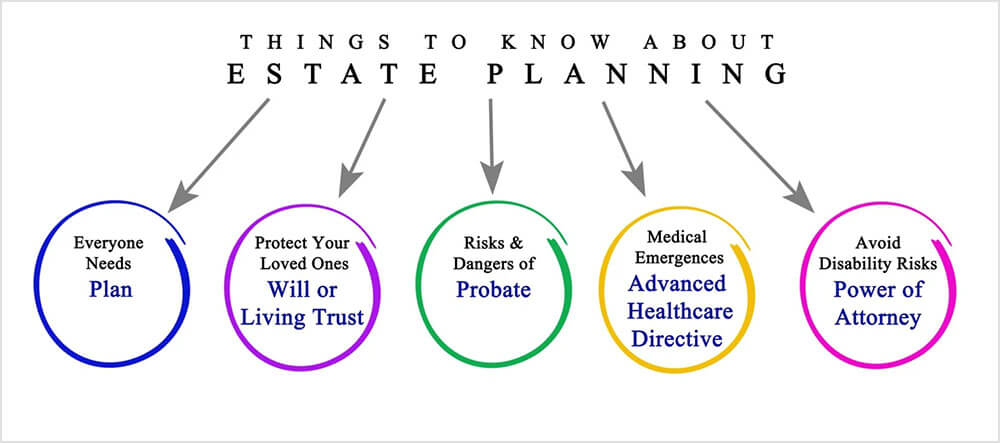
A will is a fundamental document in any estate plan. In Maryland, a valid will must be in writing, signed by the testator (the person making the will), and witnessed by two competent individuals, as required by Md. Code Ann., Est. & Trusts § 4-102. The will allows you to specify how your assets should be distributed upon your death and nominate a personal representative to manage your estate.

Revocable Living Trust

A revocable living trust is an increasingly popular estate planning tool in Maryland. This instrument allows you to transfer ownership of your assets to a trust during your lifetime while retaining control as the trustee. Upon your death or incapacity, a successor trustee manages and distributes the trust assets according to your instructions, often without the need for probate.

Power of Attorney

In Maryland, you can execute both financial and healthcare powers of attorney. These documents allow you to designate an agent to make financial and medical decisions on your behalf if you become incapacitated. Maryland law requires that powers of attorney be in writing and properly executed to be valid, as outlined in Md. Code Ann., Est. & Trusts § 17-101 et seq.

Advance Directive

An advance directive, also known as a living will, allows you to express your wishes regarding end-of-life medical care. Maryland law recognizes the importance of these documents in healthcare decision-making and provides specific forms for their creation under Md. Code Ann., Health-Gen. § 5-601 et seq.

Maryland Statutory Form Limited Power of Attorney

Maryland offers a statutory form limited power of attorney, which provides a standardized document for granting financial powers to an agent. This form, found in Md. Code Ann., Est. & Trusts § 17-203, can be a valuable addition to your estate plan, offering clarity and legal certainty.

Benefits of Creating an Estate Plan in Maryland

Minimizing Probate

Probate is the court-supervised process of administering a deceased person’s estate. In Maryland, probate can be time-consuming and costly. According to the Register of Wills for Maryland, probate fees can range from $50 to $2,500, depending on the estate’s value (Md. Code Ann., Est. & Trusts § 2-206). Additionally, executor fees and attorney fees can further increase costs. A well-crafted estate plan, particularly one utilizing a revocable living trust, can help minimize or avoid probate altogether, saving your beneficiaries time and money.

Example: John, a Maryland resident, created a revocable living trust and transferred his home, investments, and bank accounts into the trust. Upon his death, these assets passed directly to his beneficiaries without going through probate, saving his family thousands of dollars in probate fees and months of court proceedings.

Tax Benefits

Maryland imposes both an estate tax and an inheritance tax, making tax planning a crucial aspect of estate planning. As of 2021, Maryland’s estate tax exemption is $5 million, meaning estates valued below this threshold are not subject to state estate tax (Md. Code Ann., Tax-Gen. § 7-309). However, proper planning can help minimize tax burdens for larger estates through various strategies, such as gifting and trust creation.

Regarding inheritance tax, Maryland is one of the few states that still imposes this tax. However, direct lineal descendants (children, grandchildren, etc.), spouses, siblings, and parents are exempt from inheritance tax. Other beneficiaries may be subject to a 10% inheritance tax on their inheritances (Md. Code Ann., Tax-Gen. § 7-203).

Example: Sarah, a wealthy Maryland resident, worked with her estate planning attorney to implement a gifting strategy. By making annual gifts to her children and grandchildren within the federal gift tax exclusion limits, she was able to reduce the size of her taxable estate and potentially save her heirs hundreds of thousands of dollars in estate taxes.

Control Over Asset Distribution

Without an estate plan, your assets will be distributed according to Maryland’s intestate succession laws (Md. Code Ann., Est. & Trusts § 3-101 et seq.), which may not align with your wishes. By creating a comprehensive estate plan, you maintain control over how your assets are distributed, ensuring your loved ones are provided for according to your desires.

Protection for Minor Children

If you have minor children, an estate plan allows you to nominate a guardian to care for them in the event of your death (Md. Code Ann., Est. & Trusts § 13-701). Additionally, you can establish trusts to manage assets for your children’s benefit until they reach an age you deem appropriate for inheritance.

Example: Michael and Lisa, parents of two young children, created an estate plan that included a testamentary trust. In their will, they nominated Lisa’s sister as guardian for their children and established a trust to manage their assets. The trust provisions ensured that funds would be available for their children’s education and support, with full distribution of assets occurring when each child reached age 25.

Digital Asset Management

In today’s digital age, it’s crucial to consider your digital assets in your estate plan. Maryland has adopted the Revised Uniform Fiduciary Access to Digital Assets Act (Md. Code Ann., Est. & Trusts § 15-601 et seq.), which provides a framework for managing and accessing digital assets after death or incapacity. Your estate plan can include provisions granting your fiduciaries access to your digital accounts, ensuring proper management of your online presence and digital property.

Example: David, an avid cryptocurrency investor, included specific provisions in his estate plan granting his executor access to his digital wallets and exchange accounts. This foresight ensured that his valuable digital assets could be properly accessed and distributed to his heirs.

Special Needs Planning

For families with members who have special needs, estate planning is particularly crucial. A properly structured special needs trust can provide for a disabled loved one without jeopardizing their eligibility for government benefits. Maryland law recognizes and provides for special needs trusts under Md. Code Ann., Est. & Trusts § 14.5-1002.

Example: Robert and Emily have a daughter with autism who receives Supplemental Security Income (SSI). They created a special needs trust as part of their estate plan to provide for their daughter’s supplemental needs without disqualifying her from essential government benefits.

Consequences of Not Having an Estate Plan in Maryland

The Reality of Dying Intestate in Maryland

The primary issue with intestate succession is that it rarely aligns perfectly with a person’s actual wishes. 

For example, many people assume that a surviving spouse will automatically inherit everything. However, in Maryland, if you die with a surviving spouse and minor children, the spouse only receives one-half of the estate, while the children share the other half. If the children are adults, the spouse receives the first $40,000 plus half of the remaining balance. 

This can lead to significant financial strain for a surviving spouse who may need the full estate to maintain their quality of life or pay off a mortgage.

Family Conflicts and Potential Legal Battles

These legal disputes are not only emotionally draining during a time of grief but are also financially devastating. The costs of hiring litigation attorneys and the fees associated with prolonged court oversight are paid directly out of the estate’s assets. By the time a judge settles the dispute, the total value of the inheritance may be significantly depleted, leaving the intended heirs with far less than they would have received under a structured plan.

Lack of Control Over Healthcare and Incapacity

While the law provides a priority list of who can make decisions (e.g., a guardian, spouse, adult children, or parents), these individuals may not be the ones you trust most with life-altering medical choices. 

Furthermore, without a Financial Power of Attorney, your family might be forced to petition the court for a “guardianship of the property” just to pay your bills or manage your investments. This process is public, expensive, and requires ongoing reporting to the court, all of which could be avoided with simple planning documents.

Recent Updates to Maryland Estate Tax Laws

If your estate exceeds this $5 million threshold and you have not utilized tax-saving strategies like trusts or lifetime gifting, your heirs could face a state estate tax of up to 16%. Regularly reviewing your plan is essential to ensure that you are taking advantage of “portability”—the ability of a surviving spouse to use the unused portion of their deceased spouse’s $5 million exemption—which requires specific filings with the Comptroller of Maryland.

Maryland’s Small Estate Administration

While this process is faster and requires less paperwork, it still necessitates filing with the Register of Wills. Even for small estates, having a will is beneficial because it allows you to waive the “bond” requirement, saving the estate the cost of paying an insurance company to guarantee the Personal Representative’s performance.

Comparing Maryland to Neighboring Jurisdictions

Delaware also lacks a state estate tax. Because Maryland is one of the few states that still maintains its own estate tax, residents must be particularly diligent. Working with an attorney who understands these nuances is the only way to ensure your legacy is protected from unnecessary taxation and state interference.

Selecting a Maryland Estate Planning Attorney

When creating or updating your estate plan, it’s essential to work with an experienced Maryland estate planning attorney.

Look for an attorney who:

  1. Specializes in estate planning and is familiar with Maryland’s specific laws
  2. Stays current with changes in state and federal estate planning regulations
  3. Can provide personalized advice based on your unique financial situation and family dynamics
  4. Has experience with complex estate planning tools such as various types of trusts and tax-saving strategies

Final Thoughts

Creating a comprehensive estate plan in Maryland offers numerous benefits, including probate avoidance, tax minimization, asset protection, and peace of mind. By working with an experienced Maryland estate planning attorney, you can ensure that your wishes are properly documented and legally enforceable, providing for your loved ones and protecting your legacy.

Remember, estate planning is not a one-time event. As your life circumstances change and laws evolve, it’s important to review and update your estate plan regularly to ensure it continues to meet your needs and goals.

Contact Us to learn more about your estate planning options. Call (443) 702-5769 or send a us message.

Disclaimer: This blog post is for informational purposes only and does not constitute legal advice. The information provided here may not be current or applicable to your specific situation. Laws and regulations change frequently, and their application can vary based on individual circumstances. Always consult with a qualified Maryland estate planning attorney for personalized advice regarding your estate planning needs.

Frequently Asked Questions: The Benefits of Creating an Estate Plan in Maryland

Why do I need a tailored estate plan in Maryland?

A comprehensive Maryland estate plan ensures your assets pass to chosen beneficiaries smoothly while minimizing probate costs and state taxes. Without a plan, statutory intestate rules under MD Code, Estates and Trusts § 3-101 dictate distribution. Proper planning protects your family, preserves wealth, outlines healthcare choices, and establishes legal guardians for minor children according to explicit statutory procedures.

How does an estate plan help my family avoid Maryland probate?

Living trusts, joint ownership, and transfer-on-death registrations under MD Code, Estates and Trusts § 16-107 transfer property directly to loved ones outside the Register of Wills proceedings. Avoiding formal probate reduces administrative court fees, eliminates lengthy public proceedings, and speeds up asset distribution. This proactive structuring keeps family financial matters private while protecting heirs from unnecessary stress.

What happens if I pass away without a will in Maryland?

Dying intestate means Maryland law dictates asset distribution among relatives under MD Code, Estates and Trusts § 3-102. Courts appoint a personal representative to manage assets, potentially creating delays and family friction. Unmarried partners receive nothing, minor children may require court-appointed guardians, and tax planning opportunities are completely lost, making legal preparation essential for asset protection. 

Can an estate plan minimize Maryland estate and inheritance taxes?

Yes, strategic planning reduces tax exposure through irrevocable trusts, lifetime gifting strategies, and marital deduction provisions. Maryland imposes an estate tax and an inheritance tax under MD Code, Tax – General § 7-203, though direct descendants are exempt. Proper legal structuring ensures non-exempt relatives minimize tax liabilities, preserving a significantly larger portion of your accumulated wealth for future generations.

What is the difference between a Will and a Revocable Living Trust?

A will takes effect only after death and requires court probate to transfer property. A revocable living trust established pursuant to MD Code, Estates and Trusts § 14.5-601 manages assets during life and transfers them privately upon death. Trusts also provide seamless incapacity planning, allowing a designated successor trustee to manage assets immediately if you become disabled.

How does an estate plan protect my minor children in Maryland?

An estate plan lets you formally designate legal guardians for minor children under MD Code, Estates and Trusts § 13-101, preventing court custody disputes. Additionally, creating testamentary or standalone trusts prevents minors from inheriting assets outright at age eighteen. You name a trusted trustee to manage financial assets, funding education, living expenses, and healthcare until children reach a mature age specified by you.

What power of attorney documents should I include in Maryland?

A statutory financial power of attorney under MD Code, Estates and Trusts § 17-202 designates an agent to handle financial affairs if you are incapacitated. A Maryland Advance Directive designates a healthcare agent and specifies end-of-life care choices under MD Code, Health – General § 5-602. Having both durable documents prevents costly, time-consuming court guardianship proceedings during sudden medical crises.

How can an estate plan protect my beneficiaries from creditors?

By placing inheritances into discretionary or spendthrift trusts governed by MD Code, Estates and Trusts § 14.5-502, you shield assets from your beneficiaries’ creditors, future ex-spouses, and personal lawsuits. The trustee controls distributions, ensuring inherited wealth remains protected within the trust framework while still providing financial support and long-term security for your loved ones across their lifetimes.

When should I update my existing Maryland estate plan?

You should review your estate plan every three to five years, or immediately following major life events. Marriage, divorce, birth of children, buying real estate, moving states, or legislative changes to MD Code, Estates and Trusts § 4-105 warrant immediate updates. Keeping documents current ensures your legal provisions reflect current state statutes and accurately align with evolving personal goals and family circumstances.

How does an advance directive work under Maryland law?

Under MD Code, Health – General § 5-603, a Maryland Advance Directive combines a medical power of attorney with a living will. It allows you to select a healthcare representative and outline treatment preferences regarding life-sustaining procedures. This legal document ensures medical providers honor your personal wishes during emergencies and relieves family members of making agonizing medical decisions without clear legal guidance during crises.

Can an estate plan protect my business in Maryland?

Yes, estate planning coordinates business succession by establishing buyout agreements, transfer structures, and managing governance transitions under MD Code, Corporations and Associations § 4A-606. Without proper structure, unexpected death or incapacity can freeze company operations, cause partnership disputes, or force liquidation to pay taxes. A strong plan maintains business continuity, preserves commercial value, and protects ongoing income streams for your surviving family.

How do I choose the right personal representative or trustee?

Select a reliable, financially responsible individual or corporate trustee under MD Code, Estates and Trusts § 6-101 capable of managing complex administrative duties. Your representative must communicate well, understand legal obligations, and act impartially toward all beneficiaries. Naming backup fiduciaries is equally important, ensuring experienced oversight continues smoothly if your primary choice becomes unable or unwilling to serve when needed.

Last Updated: September 2026

https://www.nguyenroche.com/wp-content/uploads/2025/12/images_blog_create-estate-planr.jpg 667 1000 Nguyen Roche https://www.nguyenroche.com/wp-content/uploads/2026/05/logo1.png Nguyen Roche2024-05-27 19:42:522026-09-22 10:33:41The Benefits of Creating an Estate Plan in Maryland

Our Latest Posts

  • Coordinating Your Will, Trust, and Operating Agreements So They Don’t Conflict
  • What Happens When a Minority Owner Is Frozen Out of a Maryland Business?
  • How Can Succession Planning Protect Your Maryland Company If a Key Owner Leaves or Dies?
  • How Can Investors Protect Themselves in Real Estate Syndication and JV Agreements?
  • Do You Need a Lawyer for a Maryland 1031 Exchange or Like‑Kind Property Swap?
  • Why Estate Planning Is Critical for Maryland Business and Property Owners with Young Children
  • What Contract Terms Do Maryland Commercial Tenants Need to Negotiate Before Signing?
  • Should Your Maryland Company Use Master Service Agreements to Streamline Contracts?
  • How Do Courts Handle Failed Real Estate Joint Ventures Between Investors in Maryland?
  • How Are Maryland Businesses Valued in Commercial and Shareholder Disputes?
Nguyen Roche
Nguyen Roche
Review Us

Locations

Owings Mills
500 Redland Ct,, Ste. 212
Owings Mills, MD 21117
Maps & Directions

Phone: (443) 238-0160
(By appointment only)

Baltimore
6 E. Eager Street
Baltimore, MD 21202
Maps & Directions

Phone: (443) 238-0160
(By appointment only)

Practices

  • Business and Corporate Law
  • Real Estate Law
  • Family Law
  • Estate Planning Lawyers in Maryland
  • Criminal Defense Lawyer
  • Personal Injury

Links

  • Home
  • Our Firm
  • Lawyers
  • Practices
  • Industries
  • Insights
  • Resources
  • Inclusion
  • Careers
  • Let’s Talk
  • Pay Online

Sign Up for Our Newsletter

    © 2026 Nguyen Roche. All Rights Reserved. Site By Too Darn Loud - Digital Marketing
    • Terms of Use
    • Privacy Policy
    • Sitemap
    Scroll to top Scroll to top Scroll to top